Land Surveying: Ethics of a Land Surveyor

land surveyorNot a lot of people realize that land surveying is actually a fusion of art and science. Yes, different equipment is available for the surveyor’s use, but the land surveyor still has the last say on the results.

Despite this though, a land surveyor still has several guidelines to follow. If you’ve had an experience with a dishonest surveyor, or are wary about hiring one, this article should be able to help you out.

What ethics should a land surveyor have?

A surveyor should always start a project with fairness in mind. Your client as well as everybody party involved in the project is expecting you to be fair and just so make the best possible assessment with the evidences handed to you.

Before a project commences, the surveyor assigned to the project should come forward if there’s a possibility of conflict of interest. This is very important to preserve their relationship with the client. A surveyor should avoid professional impropriety by declaring involvement or any prior affiliations with any of the involved parties. It is also the surveyor’s responsibility to keep any information regarding the project as well as the client confidential even after the project is done.

Several cases were reported where the surveyor overcharged the client. This usually happens when the client doesn’t know anything about land surveying. A land surveyor running his business with ethics will never do this. Fortunately, there are more honest land surveyors than dishonest ones.

A surveyor should charge a project according to the length of time needed to get it done as well as the level of technical complexity required for it. For the surveyor’s sake as well as the client, one should never sign plans, certificates or reports unless these are personally supervised by him. Not only is this unfair on the client’s side, doing so could put his reputation in danger should the results get disputed and he doesn’t know anything about them.

Just like with other industries, a land surveyor should never undermine the capability of other surveyors or the people from the land surveying industry.

New technologies come up for land surveying all the time. When a surveyor knows that a project is beyond his skills, he should tell the client about it. There’s no sense accepting a project only to come up with a subpar result. It will only hurt your business and your reputation.

Surveyors should also be responsible enough to study, do a thorough research, practice and utilize his skills before offering clients a new service. If a surveyor is new to flood determination, for instance, then he needs to make sure that he knows how to perform it before offering it to his clients.

Surveyors do not work alone. They usually have a staff to support them. The land surveyor needs to be responsible for their actions at all cost, for actions or work carried out by them.

author avatar
Surveyor

More Posts

Aerial view of a commercial property with a building, parking area, access road, and open land when documenting ALTA survey utilities
alta survey
Surveyor

How an ALTA Survey Documents Utilities Across a Commercial Site

An owner planning a new wing, a larger parking lot or a drive-thru lane on an existing commercial property needs to know what runs under the pavement before design starts. An ALTA/NSPS Land Title Survey can answer part of that question. It records the utility evidence a survey crew can

Read More »
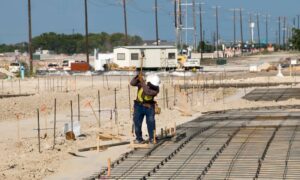
Surveyor checking construction staking on a graded site for road and building pad work
construction
Surveyor

Construction Staking From Road Grade to Building Pad

Construction staking on a new site happens in rounds. A surveyor usually stakes the road grade first, then returns for curbs, utilities, the building pad and the footings. Every round builds on the elevations from the round before it. When the road and the pad don’t agree, the mistake often

Read More »
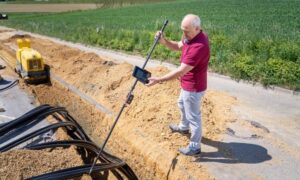
Surveyor performing a construction survey beside a utility trench while checking site measurements before excavation
construction
Surveyor

Construction Survey Checks Before Utility Trenching Begins

Opening a trench too soon can cost a project more than time. Shifted lines, wrong grades, and clashes with old utility lines often show up once the equipment is already in the ground. By then they cost more to fix. In Boise, new development often sits close to older utility

Read More »
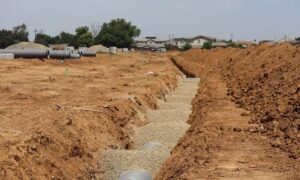
Residential development site showing utility trenches and layout markers for construction staking
construction
Surveyor

Construction Staking for New Neighborhoods on Compact Lots

Smaller lots change how a neighborhood gets built. When homes sit close together, the space between them shrinks too. Construction staking has to be more exact on these lots than on bigger ones. A stake that’s off by a few inches on a wide lot may not cause a problem.

Read More »
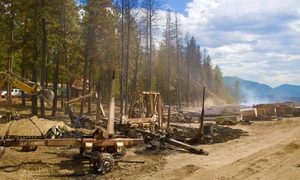
Burned hillside near a site requiring flood elevation survey review
flood damage
Surveyor

Flood Elevation Survey for Rebuilding Near Burn Scars

A wildfire does more than remove trees and brush. It strips away the ground cover that normally slows down rain and lets it soak into the soil. Once that cover is gone, rainfall hits bare, scorched ground and runs off much faster than before. This matters most in places like

Read More »
Elevation Certificates review for a Bonner County Idaho home after a FEMA flood map update.
elevation certificate
Surveyor

When to Order an Elevation Certificate After a Flood Map Change

FEMA updates its flood maps from time to time. When that happens, owners, buyers, lenders and insurers tend to ask the same thing. Does the new flood information mean I need a new elevation certificate? The honest answer is that it depends. A map change can shift the flood picture

Read More »