Idaho’s cities are growing. Boise, Eagle, and Nampa are adding new neighborhoods on smaller pieces of land. These narrow infill lots are perfect for starter homes and young families. But here’s what many buyers don’t realize: just because you can drive to the property doesn’t mean you can legally build on it. An ALTA survey helps buyers spot access problems that could derail your entire project.
Narrow infill lots are becoming the standard for new development in Ada County. Over 2,400 new narrow lots under 50 feet wide have been created in the past two years. Yet 18 percent of building permits in these areas face initial denial because of access conflicts. A survey can reveal these problems before you purchase the land.
Why Vehicle Access Is Not the Same as Building Access
Many narrow lot buyers make the same mistake. They visit the property. A car drives up and down the driveway with no problem. They assume building on the lot will be straightforward.
This thinking costs people money.
Vehicle access and building access are different things. A driveway that works for your car may not work for construction trucks. Fire department requirements for emergency vehicles often demand space your current driveway cannot provide. Ada County codes require specific widths and sight lines that simply driving a car cannot test.
Here’s what happens. You buy the lot. You start design work. Then during permit review, the city denies your application. The driveway is too narrow. The entry angle is too steep. Trees block the required sight line. Now you face expensive changes. Regrading the driveway costs $8,000 to $25,000. Redesigning your site plan takes months.
An ALTA survey catches these problems before you close on the property. Instead of discovering issues after purchase, you know exactly what the land supports.
What an ALTA Survey Reveals About Narrow Lot Access
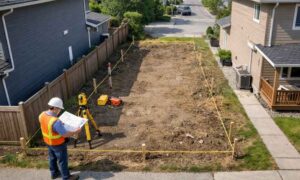
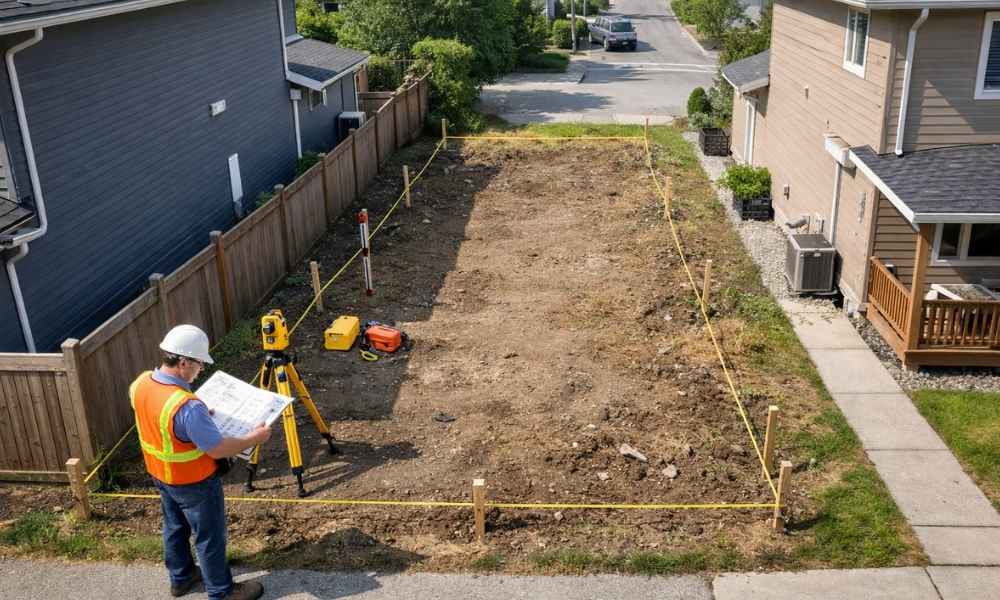
An ALTA survey is more than a property line map. It measures specific details about how your lot connects to the street. For narrow lots, these measurements matter more than anywhere else.
The survey documents driveway width. Ada County requires a minimum of 12 feet for residential access. Fire lanes must be 14 feet wide. Many narrow lot driveways fall short of these standards. The survey shows the exact measurement.
The survey also measures entry angles and slopes. A driveway cannot exceed a 15 percent grade in Ada County. Steep driveways create problems for emergency vehicles and construction equipment. The survey shows if your entry meets code requirements.
Sight lines are another critical measurement. You need 150 feet of clear visibility at your lot entry. Trees, fences, or neighboring structures often block this. The survey reveals what blocks your sight line and how to fix it.
Finally, the survey shows where your building must sit. Setback rules determine how close a structure can be to the front property line. On narrow lots, setbacks can consume the space you need for an access route. The survey makes this clear before you plan a building location.
Common Access Problems on Idaho Starter Home Lots
Certain problems show up again and again on narrow infill lots in our area.
The first problem is driveways below code width. Older neighborhoods have narrow driveways designed for smaller homes. New buyers want to build larger structures that require wider entry points. The survey reveals this gap.
The second problem is the entry slope. Many narrow lots sit uphill from the street. Creating a driveway with an acceptable grade becomes difficult or expensive. The survey shows if regrading is necessary.
The third problem is sight line obstruction. Trees or fences create safety hazards at the driveway entry. Fire departments often require removal of these obstructions. The survey identifies what must go.
The fourth problem happens on corner lots. Some narrow lots sit at the intersection of two streets. Local zoning rules often require extra setbacks at corners. These extra setbacks can eliminate your usable building area. The survey documents this constraint.
The fifth problem is building setbacks eating your driveway space. You may have room for a driveway entry on paper, but the building setback line prevents it. The survey shows exactly where you can legally place a structure and where the driveway must sit.
Steps to Take Before Your ALTA Survey
You don’t have to wait for a survey to start checking access. Free resources can tell you much about your lot.
First, visit Ada County’s online zoning map. Type in your address and see what minimum driveway width and setback requirements apply to your lot. This takes 15 minutes and costs nothing.
Second, contact your city’s fire department. Ask about sight line requirements and emergency vehicle access standards for your specific address. Fire departments have specific rules for different neighborhoods. Asking these questions early prevents surprises later.
Third, walk the property with a builder or architect. Point out physical features that might affect access. Trees, slopes, and neighboring structures all matter. A builder can spot constraints that you might miss.
Taking these three steps before ordering an ALTA survey helps you understand your lot’s challenges. You can then decide if the property still fits your goals. If access problems seem fixable, an ALTA survey confirms exactly what needs to happen.
Why Timing Matters for Narrow Lot Buyers
Ordering an ALTA survey at the right time changes everything.
If you order the survey early in the process, you still have options. You can modify your building plans to fit the lot. You can request a zoning variance. You can walk away from the deal if access problems are too severe.
If you wait until after closing, your options disappear. You own the land. Now every fix costs you money and time. Redesigning a site plan after purchase often requires architect fees. Regrading a driveway requires construction costs. These expenses add up quickly.
The best time to order an ALTA survey is before you sign the purchase agreement. This timing protects you and gives you clear information for final negotiations.
Moving Forward With Real Information
Narrow infill lots are reshaping how we build in Idaho. They make starter homes possible in growing communities. But their tight spaces create real constraints that many buyers overlook.
An ALTA survey doesn’t solve access problems. Instead, it reveals what problems exist and how severe they are. Armed with this information, you can make smart decisions about your property purchase.
The survey costs $1,500 to $3,000. That investment prevents redesign costs of $8,000 to $25,000 later. For narrow lot buyers, ordering a survey early is simply smart planning.
Your new home on an infill lot can work beautifully. You just need clear information about access before you commit. That’s what an ALTA survey provides.